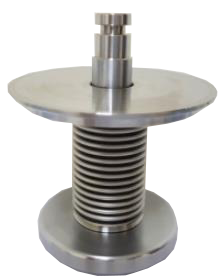
Bellows Seals for Industrial Valves
Bellows Seals for Industrial Valves
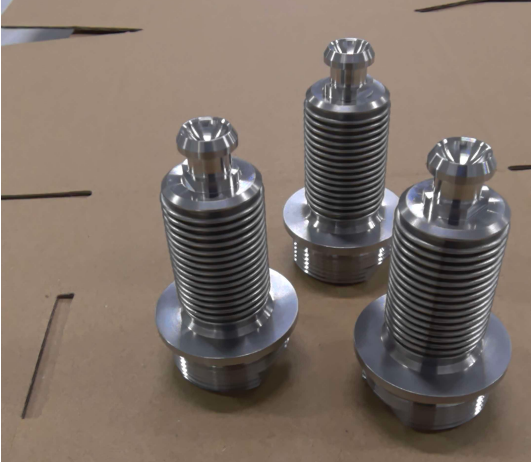
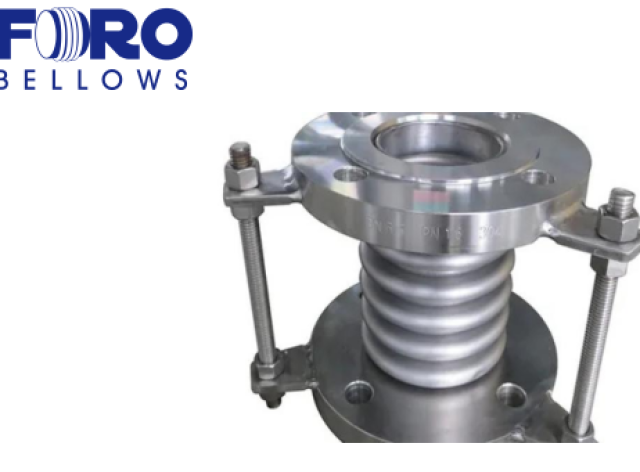
Metal bellows can be used for high-end valve seals in unfilled applications. In valve applications, metal bellows serve as flexible pressure-bearing seals,
compensating for relative movement between the valve plate and the valve body during valve opening and closing.
Valve bellows are typically multi-layered to distribute pressure loads across multiple thin layers, achieving a shorter overall length for valve sealing.
Since the bellows primarily bear the stress, multi-layered bellows can withstand greater deformation than single-layer bellows.
Therefore, the length of bellows used can increase as the required length for operation increases, and pressure resistance increases
with increasing the number of bellows layers and decreasing the thickness of each individual layer.
The material selection for valve bellows is determined by the ambient medium and operating temperature.
For temperatures up to 550°C, austenitic stainless steel 1.457 is the preferred material.
For higher temperatures or unconventional media, nickel-based alloys such as 2.4819 (Hastelloy C 276) or 2.4856 (Inconel 625) are available.
In addition to better corrosion resistance, nickel-based alloys offer higher pressure resistance and heat resistance than austenitic stainless steel.
The layer structure of the bellows (number of layers and thickness of each layer) is determined by the operating pressure.
To prevent bellows bending, external pressure should always be applied to the valve shaft bellows.
The number of bellows and the total length of the bellows depend on the stroke and the required service life.
Gate valves typically withstand 10,000 load cycles, while control valve bellows need to withstand greater load cycles with a shorter stroke.
INQUIRY
CATEGORIES
LATEST NEWS

CONTACT US
Contact: Cissy Peng
Phone: 86-13989717939
E-mail: sales@forobellows.com
Whatsapp:86-13989717939
Add: Louzhuang Town, Jiangyan City, Jiangsu Province